
.svg)


Australia looks to set world-first benchmark for infant sleep safety
Statements
New Australian Standard® works to bring clarity to ‘breathability’’ claims and addresses a hidden risk in infant sleep surface products.
Australia is set to become the first country to introduce a national standard addressing carbon dioxide (CO₂) buildup in infant sleep-related products – a poorly understood risk often made more confusing by marketing claims of product ‘breathability’.
In Australia, approximately 300,000 babies are born each year. Tragically, around 2,300 do not survive. Two deaths a week are the result of Sudden Unexpected Death in Infancy (SUDI). When no cause is found even after extensive testing and investigation, the death is deemed to be due to Sudden Infant Death Syndrome (SIDS).
The SIDS rate has been declining steadily since sleep practices were changed in the 1980’s to sleep infants on their side, and then later, on their backs. So, some SIDS deaths could be attributed to sleep related suffocation or changes in infant breathing.
In July 2025, Standards Australia revised its world-first mattress firmness standard. This standard was developed to reduce the likelihood of infants rolling face down into overly soft mattresses that could reduce the infant’s ability to breathe and lift their face free of the surface. This standard was recently updated into 2 parts – one for assessing mattress firmness and another test for assessing curved infant sleep surfaces.
More recently, emerging research suggests that CO₂ buildup, particularly where exhaled air becomes trapped within the sleep surface near an infant’s nose and mouth, may be a contributing factor in some sleep related infant deaths.
To help address this, Standards Australia has developed AS 5407.3:2026 - Methods of testing infant sleep surfaces, Method 3: Test for carbon dioxide and associated requirements which introduces design parameters aimed at reducing CO₂ accumulation within the sleep surface around an infant’s face.
Published in late May 2026, this new standard is the first of its kind globally, offering a groundbreaking approach to reducing risks associated with CO₂ accumulation in infant sleep products.
Developed collaboratively with industry, this standard reflects a strong partnership between experts, industry leaders, and safety advocates, ensuring it is both practical for manufacturers and meaningful for families.
Rod Balding, Chief Executive Officer at Standards Australia, said the standard was developed to bring consistency and accountability to an area that has lacked clear definition.
"Terms like ‘breathable’ have been widely used across the market without a consistent way to verify what they mean in practice," he said. "This standard introduces a clear, evidence-based method for assessing carbon dioxide buildup, helping ensure products perform as intended and supporting safer design across the industry."
For parents, the term ‘breathable’ can feel reassuring, however, without consistent definitions or testing, it may not indicate a safer product.
"Parents of newborns are already exhausted and doing their best to make safe choices, but the reality is the market can be confusing,"
said Alexandra Hamilton, founder of River’s Gift, a charity established in 2011 following the loss of her and Karl’s baby boy, River, to SIDS.
“Anything that reduces that confusion and lightens the mental load has the potential to make a real difference for families - and importantly, support safer sleep practices."
AS 5407.3 aims to address this gap by shifting the focus from claims to measurable performance, supporting safer product design and more informed decision-making.
The standard works to reinforce the importance of a safe sleep environment during this early and most vulnerable stage of life.
Standardising Safer Sleep Design
The standard works provides a framework for industry to design and test the surfaces of sleep-related products against CO₂ accumulation risks, with a focus on:
- Performance-based testing to measure CO₂ buildup in infant sleep products
- Design requirements that reduce the potential for trapped exhaled air near an infant’s face
- Greater clarity for consumers by addressing ambiguity around “breathable” claims
More information on AS 5407.3:2026 and other related standards are available here.
- Infant and Nursery Products alliance of Australia (INPAA) https://inpaa.com.au
- Raising Children’s Network: https://raisingchildren.net.au/newborns/sleep
- Red Nose: https://rednose.org.au/our-impact/programs/research-and-education-series/
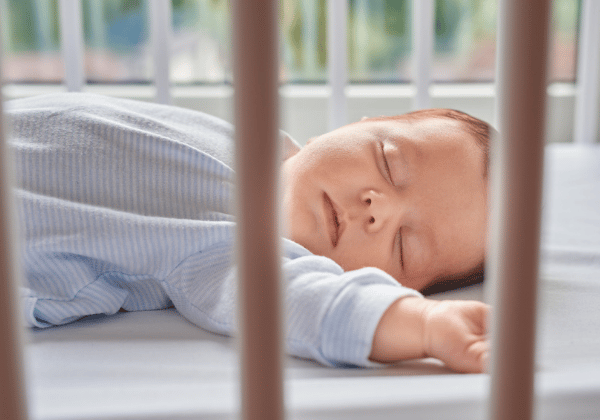
New Australian Standard® works to bring clarity to ‘breathability’’ claims and addresses a hidden risk in infant sleep surface products.
Australia is set to become the first country to introduce a national standard addressing carbon dioxide (CO₂) buildup in infant sleep-related products – a poorly understood risk often made more confusing by marketing claims of product ‘breathability’.
In Australia, approximately 300,000 babies are born each year. Tragically, around 2,300 do not survive. Two deaths a week are the result of Sudden Unexpected Death in Infancy (SUDI). When no cause is found even after extensive testing and investigation, the death is deemed to be due to Sudden Infant Death Syndrome (SIDS).
The SIDS rate has been declining steadily since sleep practices were changed in the 1980’s to sleep infants on their side, and then later, on their backs. So, some SIDS deaths could be attributed to sleep related suffocation or changes in infant breathing.
In July 2025, Standards Australia revised its world-first mattress firmness standard. This standard was developed to reduce the likelihood of infants rolling face down into overly soft mattresses that could reduce the infant’s ability to breathe and lift their face free of the surface. This standard was recently updated into 2 parts – one for assessing mattress firmness and another test for assessing curved infant sleep surfaces.
More recently, emerging research suggests that CO₂ buildup, particularly where exhaled air becomes trapped within the sleep surface near an infant’s nose and mouth, may be a contributing factor in some sleep related infant deaths.
To help address this, Standards Australia has developed AS 5407.3:2026 - Methods of testing infant sleep surfaces, Method 3: Test for carbon dioxide and associated requirements which introduces design parameters aimed at reducing CO₂ accumulation within the sleep surface around an infant’s face.
Published in late May 2026, this new standard is the first of its kind globally, offering a groundbreaking approach to reducing risks associated with CO₂ accumulation in infant sleep products.
Developed collaboratively with industry, this standard reflects a strong partnership between experts, industry leaders, and safety advocates, ensuring it is both practical for manufacturers and meaningful for families.
Rod Balding, Chief Executive Officer at Standards Australia, said the standard was developed to bring consistency and accountability to an area that has lacked clear definition.
"Terms like ‘breathable’ have been widely used across the market without a consistent way to verify what they mean in practice," he said. "This standard introduces a clear, evidence-based method for assessing carbon dioxide buildup, helping ensure products perform as intended and supporting safer design across the industry."
For parents, the term ‘breathable’ can feel reassuring, however, without consistent definitions or testing, it may not indicate a safer product.
"Parents of newborns are already exhausted and doing their best to make safe choices, but the reality is the market can be confusing,"
said Alexandra Hamilton, founder of River’s Gift, a charity established in 2011 following the loss of her and Karl’s baby boy, River, to SIDS.
“Anything that reduces that confusion and lightens the mental load has the potential to make a real difference for families - and importantly, support safer sleep practices."
AS 5407.3 aims to address this gap by shifting the focus from claims to measurable performance, supporting safer product design and more informed decision-making.
The standard works to reinforce the importance of a safe sleep environment during this early and most vulnerable stage of life.
Standardising Safer Sleep Design
The standard works provides a framework for industry to design and test the surfaces of sleep-related products against CO₂ accumulation risks, with a focus on:
- Performance-based testing to measure CO₂ buildup in infant sleep products
- Design requirements that reduce the potential for trapped exhaled air near an infant’s face
- Greater clarity for consumers by addressing ambiguity around “breathable” claims
More information on AS 5407.3:2026 and other related standards are available here.
- Infant and Nursery Products alliance of Australia (INPAA) https://inpaa.com.au
- Raising Children’s Network: https://raisingchildren.net.au/newborns/sleep
- Red Nose: https://rednose.org.au/our-impact/programs/research-and-education-series/

