



Driving safe AI adoption in engineering
Statements
The engineering sector is rapidly adopting digital platforms and emerging AI capabilities. However, practitioners frequently experience operational friction when attempting to use static PDF standards with modern digital modelling and AI design tools. This disconnect creates inefficiency and manual double-handling and risks errors as well as breach of usage rights.
The solution requires a fundamental shift in perspective from the industry, streamlining digital workflows to support professional judgement.
CalcTree Founder Tim Rawling says that the profession must move beyond simply digitising documents.
“Treating standards as static documents creates a headwind for adoption of new productivity tools, whereas creating verified building blocks provides AI with inputs that allow users to work fast without breaking things.”
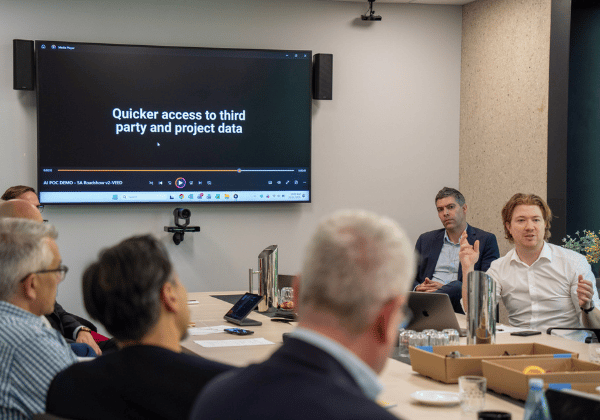
The need for evolution was a central theme at joint roundtables recently hosted by Standards Australia and Engineers Australia in Sydney, Brisbane, Perth and Adelaide. These industry insights are captured in our joint whitepaper, Trusted Standards in a Connected Digital Engineering Environment. Across the sessions, practice leaders were hesitant about rapid technology adoption at the risk of sacrificing professional judgement. These industry fears are driven by tangible concerns over IP confidentiality, the risks of model hallucination and the threat of over-automation in safety-critical workflows. While AI technology has clear use-cases, participants have established that human expert judgement remains central – AI accelerates getting to a final decision, but doesn't replace practitioner sign-off. Overcoming this hesitation means building systems where software assists rather than replaces human oversight.
Rawling emphasises that "tools must be designed so that while automation handles the assembly, judgement and final sign-off remain with the practitioners." Without that, he warns, organisations risk releasing incorrect designs because they are "running at breakneck speed with AI, but assembling designs from parts nobody has verified."
To address these critical industry challenges, Standards Australia is actively transitioning standards from static reference documents into connected digital infrastructure. By embedding verified standards directly into commercial software platforms, practitioners can reduce data accuracy risks in high-compliance environments. Linking calculations directly to source clauses provides engineering teams with complete traceability, auditability and compliance. For developers creating these tools, this compliance is essential.
Rawling notes that CalcTree’s platform is “assembling designs from a verified kit of parts that allows engineers to get the speed of an AI tool, but you can trust that the building blocks that it’s using have actually been verified by professionals.”
While modern engineering relies heavily on digital tools, automation only assists qualified engineering judgement. Integrating standards directly into design software saves time and reduces duplication without transferring decision-making or liability away from qualified professionals.
Standards Australia and Engineers Australia are working together to establish standards that protect public safety while driving digital innovation, and to enable engineers to use digital platforms and emerging AI capabilities with complete compliance and confidence.
Discover more about how we are working with engineers to shape the future of digital engineering: Trusted Standards in a Connected Digital Engineering Environment Whitepaper
The engineering sector is rapidly adopting digital platforms and emerging AI capabilities. However, practitioners frequently experience operational friction when attempting to use static PDF standards with modern digital modelling and AI design tools. This disconnect creates inefficiency and manual double-handling and risks errors as well as breach of usage rights.
The solution requires a fundamental shift in perspective from the industry, streamlining digital workflows to support professional judgement.
CalcTree Founder Tim Rawling says that the profession must move beyond simply digitising documents.
“Treating standards as static documents creates a headwind for adoption of new productivity tools, whereas creating verified building blocks provides AI with inputs that allow users to work fast without breaking things.”
The need for evolution was a central theme at joint roundtables recently hosted by Standards Australia and Engineers Australia in Sydney, Brisbane, Perth and Adelaide. These industry insights are captured in our joint whitepaper, Trusted Standards in a Connected Digital Engineering Environment. Across the sessions, practice leaders were hesitant about rapid technology adoption at the risk of sacrificing professional judgement. These industry fears are driven by tangible concerns over IP confidentiality, the risks of model hallucination and the threat of over-automation in safety-critical workflows. While AI technology has clear use-cases, participants have established that human expert judgement remains central – AI accelerates getting to a final decision, but doesn't replace practitioner sign-off. Overcoming this hesitation means building systems where software assists rather than replaces human oversight.
Rawling emphasises that "tools must be designed so that while automation handles the assembly, judgement and final sign-off remain with the practitioners." Without that, he warns, organisations risk releasing incorrect designs because they are "running at breakneck speed with AI, but assembling designs from parts nobody has verified."
To address these critical industry challenges, Standards Australia is actively transitioning standards from static reference documents into connected digital infrastructure. By embedding verified standards directly into commercial software platforms, practitioners can reduce data accuracy risks in high-compliance environments. Linking calculations directly to source clauses provides engineering teams with complete traceability, auditability and compliance. For developers creating these tools, this compliance is essential.
Rawling notes that CalcTree’s platform is “assembling designs from a verified kit of parts that allows engineers to get the speed of an AI tool, but you can trust that the building blocks that it’s using have actually been verified by professionals.”
While modern engineering relies heavily on digital tools, automation only assists qualified engineering judgement. Integrating standards directly into design software saves time and reduces duplication without transferring decision-making or liability away from qualified professionals.
Standards Australia and Engineers Australia are working together to establish standards that protect public safety while driving digital innovation, and to enable engineers to use digital platforms and emerging AI capabilities with complete compliance and confidence.
Discover more about how we are working with engineers to shape the future of digital engineering: Trusted Standards in a Connected Digital Engineering Environment Whitepaper