
.svg)

Women in Standards 2026: Celebrating leadership, visibility and Inclusion on International Women’s Day
Statements
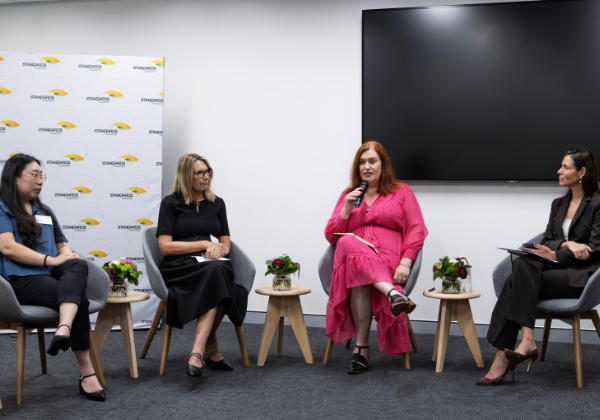
On Tuesday, 10 March Standards Australia proudly hosted the Women in Standards event, bringing together industry leaders, committee members, partners, and staff for a morning of reflection and celebration in recognition of International Women’s Day.
Held at Standards Australia’s Sydney office and livestreamed to virtual attendees, the event highlighted the significant contributions women make to Australia’s standards system and explored new pathways to strengthen representation and participation.
This year’s International Women’s Day theme, “Balance the Scales”, set the tone for an engaging and thought-provoking discussion. Adopted by UN Women Australia, the theme calls for renewed commitment to addressing the structural inequities that affect women’s access to fair and effective systems – legal, professional, and societal.
Throughout the morning, speakers linked this message to the standards community’s ongoing responsibility to ensure diverse perspectives shape safe, trusted and future-ready standards.
Celebrating women leading change in standards
The event featured an impressive panel of leaders from across industry: Kareen Riley-Takos (Chief of Engagement at Standards Australia), Jocelyn Martin (Managing Director at Housing Industry Association), Lucy Finlay (Standardisation and Regulation Manager at Schneider Electric), and Michelle Su (Senior Systems Engineer at ResMed). Together, they shared stories from their careers and offered insights in their experience as a woman working with standards.
On how standards can play a role in accelerating gender equality progress, Michelle Su said “If you want to help close that gap, a good place to start would be in standards... So many things in our everyday lives are touched and guarded by standards. So, we start from the top of that process where we can at least try for equal gender representation at those forums, which then influence the products, infrastructure and systems made from those standards. Standards can play a role in accelerating fair gender representation in society.”
Reflecting on representation within the sector, Jocelyn Martin said “when we’re harvesting the voices of our members, we are still challenged in getting diverse voices into the mix. That requires a deliberateness in how we put together our committees, how we actually approach people and how we bring people on board.”
In both industry and the standards space, Lucy Finlay noted that “every woman will have a different experience, different constraint and a different background.” She continued, saying “I encourage everybody to be respectfully curious about what the individual barriers are that any individual might face when it comes to participating in the important work of standards."
Each speaker reflected on their experiences within both standards development and their broader industries, emphasising how women’s expertise and leadership continue to drive innovation, strengthen governance and improve outcomes for communities nationwide. Many also acknowledged the challenges that persist, from gender imbalance in technical fields to barriers affecting women’s pathways into committee roles and decision-making forums.
A growing community and a shared commitment to inclusion
More than 200 participants joined the event in person and online, reflecting the growing engagement across Australia’s standards community. Attendees included contributors from industry, academia, government, Standards Australia committee members, and staff, creating a dynamic and diverse audience.
This year’s celebration was supported by four longstanding partners: Australian Industry Group, Engineers Australia, AusIMM, and the Housing Industry Association. Their collaboration reinforces the multisector commitment to championing diversity and building a more inclusive standards ecosystem.
Participants heard how increased representation on standards committees leads to richer discussion, more balanced decision-making, and stronger alignment with the needs of the communities that standards serve. Speakers encouraged attendees to explore pathways into standards development and learn more about opportunities such as NEXTgen, the Standards Bootcamp, and other programs designed to support future contributors and emerging leaders.
Connecting and looking ahead
Following the panel discussion, Sydney-based staff and guests came together for a networking session. The gathering provided attendees the chance to continue conversations sparked during the panel, meet contributors from different disciplines, and build new connections across the standards community.
For many participants, the event offered both inspiration and practical guidance. Discussions centred not only on personal leadership journeys but also on the systemic changes still required to “balance the scales”, including improving visibility of women in technical fields, removing barriers to participation, and ensuring standards development environments are safe, welcoming and representative of Australia’s diverse population.
Reflecting on the event and Standards Australia’s ongoing work, Katrina Eadie, Chief of Corporate Operations, shared: “International Women’s Day is a moment of celebration, but it also pushes us to think critically about the systems we work within. Our role is to create an environment where women feel supported, valued, and equipped to influence the future of standards in Australia.”
Continuing the momentum
This year’s Women in Standards event underscored Standards Australia’s ongoing commitment to fostering an inclusive culture where every voice is valued and empowered to contribute.
As the organisation continues to strengthen female representation in standards development, the conversations and connections established during this year’s event will play an important role in shaping future initiatives and engagement activities.
If you’re interested in contributing to Australia’s standards community, explore opportunities through our NEXTGen program and Standards Bootcamp. You can also learn more about our commitment to equity, including our progress in closing the gender pay gap, in the Employer Statement on the Gender Pay Gap.
On Tuesday, 10 March Standards Australia proudly hosted the Women in Standards event, bringing together industry leaders, committee members, partners, and staff for a morning of reflection and celebration in recognition of International Women’s Day.
Held at Standards Australia’s Sydney office and livestreamed to virtual attendees, the event highlighted the significant contributions women make to Australia’s standards system and explored new pathways to strengthen representation and participation.
This year’s International Women’s Day theme, “Balance the Scales”, set the tone for an engaging and thought-provoking discussion. Adopted by UN Women Australia, the theme calls for renewed commitment to addressing the structural inequities that affect women’s access to fair and effective systems – legal, professional, and societal.
Throughout the morning, speakers linked this message to the standards community’s ongoing responsibility to ensure diverse perspectives shape safe, trusted and future-ready standards.
Celebrating women leading change in standards
The event featured an impressive panel of leaders from across industry: Kareen Riley-Takos (Chief of Engagement at Standards Australia), Jocelyn Martin (Managing Director at Housing Industry Association), Lucy Finlay (Standardisation and Regulation Manager at Schneider Electric), and Michelle Su (Senior Systems Engineer at ResMed). Together, they shared stories from their careers and offered insights in their experience as a woman working with standards.
On how standards can play a role in accelerating gender equality progress, Michelle Su said “If you want to help close that gap, a good place to start would be in standards... So many things in our everyday lives are touched and guarded by standards. So, we start from the top of that process where we can at least try for equal gender representation at those forums, which then influence the products, infrastructure and systems made from those standards. Standards can play a role in accelerating fair gender representation in society.”
Reflecting on representation within the sector, Jocelyn Martin said “when we’re harvesting the voices of our members, we are still challenged in getting diverse voices into the mix. That requires a deliberateness in how we put together our committees, how we actually approach people and how we bring people on board.”
In both industry and the standards space, Lucy Finlay noted that “every woman will have a different experience, different constraint and a different background.” She continued, saying “I encourage everybody to be respectfully curious about what the individual barriers are that any individual might face when it comes to participating in the important work of standards."
Each speaker reflected on their experiences within both standards development and their broader industries, emphasising how women’s expertise and leadership continue to drive innovation, strengthen governance and improve outcomes for communities nationwide. Many also acknowledged the challenges that persist, from gender imbalance in technical fields to barriers affecting women’s pathways into committee roles and decision-making forums.
A growing community and a shared commitment to inclusion
More than 200 participants joined the event in person and online, reflecting the growing engagement across Australia’s standards community. Attendees included contributors from industry, academia, government, Standards Australia committee members, and staff, creating a dynamic and diverse audience.
This year’s celebration was supported by four longstanding partners: Australian Industry Group, Engineers Australia, AusIMM, and the Housing Industry Association. Their collaboration reinforces the multisector commitment to championing diversity and building a more inclusive standards ecosystem.
Participants heard how increased representation on standards committees leads to richer discussion, more balanced decision-making, and stronger alignment with the needs of the communities that standards serve. Speakers encouraged attendees to explore pathways into standards development and learn more about opportunities such as NEXTgen, the Standards Bootcamp, and other programs designed to support future contributors and emerging leaders.
Connecting and looking ahead
Following the panel discussion, Sydney-based staff and guests came together for a networking session. The gathering provided attendees the chance to continue conversations sparked during the panel, meet contributors from different disciplines, and build new connections across the standards community.
For many participants, the event offered both inspiration and practical guidance. Discussions centred not only on personal leadership journeys but also on the systemic changes still required to “balance the scales”, including improving visibility of women in technical fields, removing barriers to participation, and ensuring standards development environments are safe, welcoming and representative of Australia’s diverse population.
Reflecting on the event and Standards Australia’s ongoing work, Katrina Eadie, Chief of Corporate Operations, shared: “International Women’s Day is a moment of celebration, but it also pushes us to think critically about the systems we work within. Our role is to create an environment where women feel supported, valued, and equipped to influence the future of standards in Australia.”
Continuing the momentum
This year’s Women in Standards event underscored Standards Australia’s ongoing commitment to fostering an inclusive culture where every voice is valued and empowered to contribute.
As the organisation continues to strengthen female representation in standards development, the conversations and connections established during this year’s event will play an important role in shaping future initiatives and engagement activities.
If you’re interested in contributing to Australia’s standards community, explore opportunities through our NEXTGen program and Standards Bootcamp. You can also learn more about our commitment to equity, including our progress in closing the gender pay gap, in the Employer Statement on the Gender Pay Gap.